Hello Everyone! My latest novel, Leaving Henry will be available on Amazon.com any day now. It’s been a long road writing my mother’s amazing story, and I can’t wait to share it with all of you. Below is an excerpt from chapter one! Enjoy and don’t forget to purchase your copy on Amazon next month!
CHAPTER ONE
I woke up on my fifth birthday wet and smelling like pee. Annoyed by the smell, I lay there contemplating whether to remain in my wet, toasty bed or get up and deal with the icy cold temperature in the cabin. Fall had arrived in Henry, and cold air seeped through the walls. In our family’s cramped two-room cabin, I shared the bedroom with my brothers, Clarence and Lucian, and sisters, Escelle and Irene. Being younger, my sisters made me sleep between them, and Escelle, with her leaky bladder, peed on me almost every night. My brothers slept on cots on one side of the room, and my sisters and I slept in a queen-sized bed next to a square window with droopy brown curtains.
I was the last one up, and loud laughter coming from the main room told me where everyone else was. Shivering with the urge to pee, I threw off the covers, ran to the chamber pot by the door, and sat. While relieving myself, my eyes darted to the cloudy oval mirror above the wood bench. I finished my business and shimmied out of my wet gown, leaving it on the floor.
Naked as a jaybird, I ran on my tiptoes, climbed on the wood bench, and gazed into the mirror. My fuzzy red braids hung over my shoulders. Because I had hazel eyes that sometimes turned gray when I wore blue, and long, thick red hair, Pappy called me Red-Headed Gray-Eyed Cat. I didn’t like the name and didn’t know why he called me that. After all, Escelle and Lucian had hazel eyes, and he didn’t call them names.
Chilly, I hopped off the bench, ran to the open pinewood closet in the corner, grabbed a raggedy cotton blanket, and wrapped it around me. I peeked out the bedroom door into the main room. My parents’ bed with black curtains was against the wall, which left little space to walk. Most nights while lying in bed, I heard loud squeaking, Pappy hollering, and Momma moaning. I wondered why they made so much noise, but I didn’t dare ask. Somehow, I knew better.
Past the bed I could see into the kitchen area with a counter, shelves, icebox, and potbellied stove, and the dining table in front of it. To the right of the kitchen was the fireplace with Momma’s rocking chair. On the front wall of the house under the window with orange curtains was the couch with a coffee table in front of it. On the left side of the couch was a side table with the radio on it, and to the right between the couch and the front door was the old windup Victrola record player with a box of seventy-eights underneath. On the same wall as our bedroom door was the closet and Momma’s pump organ, which she played on Sundays and special occasions.
In the middle of the room, my brothers were splashing soapy water in a big tin tub. Having already bathed and dressed, my sisters busied themselves with breakfast. The whole family took baths on Saturdays. It was the only day we all felt fresh and clean. Pappy brought water from the well in big black pots, and Momma heated it on the stove. Momma and Pappy took baths early before we all got up, then the kids took turns bathing using the same soapy water. For the rest of the week, I stunk like a skunk and took whore baths, washing my face, hands, and fanny with a pan of heated water.
I walked into the main room, wrapped in my blanket, eager to bathe as soon as the boys were finished.
“Red-Headed Gray-Eyed Cat! Put some clothes on and take out that stinky chamber pot!” Pappy’s booming, brash voice jolted me off my feet. He was already dressed in his red checkered shirt and blue overalls, ready for work. I ran into the bedroom and hopped into the wet bed, trembling like a leaf. My father followed me.
“Did you hear me?” He spotted my wet gown crumpled on the floor. “Is that yours?” he ranted, pointing at it.
“Yes, sir,” I sniffled.
“How often do I have to tell you not to leave your dirty clothes on the floor? Get that gown and put it in the hamper now!”
“Yes, sir!”
I grabbed my gown, ran to the hamper by the door, and dropped it in. Pappy’s scolding brought Momma into the room, and her almost-six-foot frame towered over him. Two inches taller than Pappy, her stiff brown hair had a brown barrette holding her bangs in place. She stared at my father with daggers in her light brown eyes.
“Earl, why are you yelling at my baby like that on her birthday? She’s only five. Stop screaming at her!”
Pappy frowned and folded his arms. Momma stretched her arms out to me and kneeled.
“Come here, baby. Let Momma give you a birthday hug.”
I ran to Momma and hugged her neck. Her wild, coarse hair tickled my nose. She held me so tight I thought I might suffocate.
“You smell like pee,” she laughed. “The birthday girl needs a bath.”
“Escelle peed on me,” I whispered in her ear.
“It’s all right, honey.” She patted my back. “Let’s pray your sister outgrows that nasty habit one day.” She kissed my forehead, turned me around, and gently shoved me toward the door. “Go take your bath. Don’t take what your Pappy says to heart,” she added. “When it comes right down to it, he loves you.”
To me, it didn’t seem that way. His midnight eyes burned at me. I never understood why he was meaner than a snake, especially toward me.
He turned to Momma. “She has to take out that stinky night pot right now.”
“Not today she won’t.” Momma stared him down. “It’s Little Ella’s birthday, and she should be treated special. Escelle can do it. Take the boys outside so Little Ella can bathe.”
After I heard the front door slam, I tightened the blanket around myself and scooted out to the kitchen, dropped my raggedy blanket, and slowly immersed myself in the tepid water. I grabbed the soap, lathered, and scrubbed my hair, face, and body, determined to wash away the weeklong stink and dirt. I scrubbed my skin until it turned red. After I finished, I felt lighter and cleaner.
I snatched a towel from the chair by the tub and wrapped it around myself as I stepped out. I ran to the bedroom, dried myself, and slipped on my holey panties, white undershirt, blue overalls, and green sweater. Green, my favorite color, reminded me of spring. Then I slipped on my holey cotton socks and boots. The shoes were too tight and made my feet hurt, but I never complained because I knew I would get a new pair at Christmas.
By the time I went back out to the living room, Pappy had emptied and stored the tub. I sat on the floor next to Momma’s rocking chair with my dog, Old Dick, listening to the fire hiss and enjoying its warmth. I gazed at Old Dick’s hairy face, flames reflecting in his big, brown eyes, and raked my fingers through his thick golden hair. He got his name because of his gray eyebrows and his white whiskers. Pappy got him from Wildcat Fruit, the dog breeder who lived two miles up the road from us. Old Dick had been the runt of a litter and needed a home. To everyone’s surprise, he grew into a big, strong dog. I loved Old Dick. He was my buddy and protector.
Momma called me over to the couch to work on my hair, pulling and combing it.
“Ow, that hurts!” I cried out, pulling away.
Momma jerked me back and spoke in a stern voice. “Gurl, keep still so I can braid this mess.”
The back door opened and slammed, and Escelle ran by with the chamber pot. “It’s colder than a witch’s tit out there,” she muttered.
Momma glared at Escelle. “Young lady, what did you say?”
“Nothing, Momma.” She lowered her head and hurriedly left the room.
Momma styled my hair into two long braids and gave me a hand mirror. “Like it?” she asked.
I stared at the mirror. “Yes, mam, I do.”
“Well, good. Guess what I’m fixing for breakfast?” she smiled.
“What?”
“Fried apples and biscuits. Your favorite.”
I wiggled my legs with anticipation and gave a toothy grin. “Can I help make the biscuits?”
“You certainly can.”
I loved the smell of breakfast cooking on the potbellied stove. Momma usually cooked a big breakfast on the weekends. The thought of crispy fried bacon, scrambled eggs, fried apples, and biscuits made my mouth water. Momma carefully arranged thick slices of bacon in the iron skillet, then peeled and sliced the apples and dropped them in another skillet with butter. Soon, the smell of sizzling pork mixed with cinnamon and nutmeg burst into the air.
I stood on a stool to reach the cabinet, took out a large mixing bowl and the flour, lard, salt, baking powder, and milk, and put them on the counter. Then Momma asked me to set the table.
Pappy made our rectangular kitchen table not long ago. It was large enough to seat the entire family, with a chair at each end, a bench on each side, and Lucian’s highchair next to Momma’s seat. I set the table, making sure Pappy had his favorite tin mug. He always sat at the end of the table facing the front door, a safety habit he said he got during the war.
It wasn’t long before he strolled in from outside, propped his shotgun against the table, and flung his coat onto the back of his chair. He sat, tossing his hat on the table, and Momma poured him a cup of coffee.
Pappy was a hard-working sharecropper who worked our family’s land and Mister Johnson’s, a white farmer who lived three miles from us. Pappy kept a five percent share of the crops, and Mister Johnson got the rest. Pappy bought his tools and supplies on credit at People’s Drugstore and used his mule to till the land. After harvest, Pappy paid off his debt with half of his share, using the rest to care for the family. I looked up, and Pappy was smiling at me.
“Hey, birthday girl, what are you doing over there?” he asked.
“Helping Momma make biscuits,” I smiled, relieved he was no longer angry at me.
“That’s good. Every girl should know how to cook. One day, you’ll have a family of your own.”
I secretly disagreed. Marriage and a family would someday be in my future, but my dream was to leave Henry. I wanted a better life.
I kneaded the biscuit dough until my fingers ached, then Momma came over and shaped the dough into twenty biscuits while I arranged them on the cookie sheet. Momma slid them into the fiery oven and closed the door.
By the time the biscuits were done, everyone had gathered at the table, hungry and eager to devour the morning meal. Momma put the biscuits in a basket on the table with a bowl of fried apples. She brought out the rest of the food, Pappy recited the grace, and we all dug in. Pappy finished his meal before the rest of us, rose from the table, and put on his coat and hat.
“I have work to do. I’ll see you later,” he said.
“Bye, Pappy!” everyone shouted as he grabbed his gun, opened the door, and walked out.
After everyone finished eating, Escelle cleaned off the table while Momma washed dishes at the sink. My brothers chased each other, playing hide-and-seek. I ran to my room and cleaned my teeth with Arm & Hammer’s baking soda and a twig toothbrush. Momma tore twigs off the black gum tree in the back, and we chewed on the ends until the wood softened into a brush. She kept four twig toothbrushes in a box in the bedroom for us to use in the winter. In the summertime, she kept them on the porch with a pan of fresh water so we could brush our teeth and wash our hands and faces after playing outside.
After I cleaned my teeth, I wanted to see Grandmother Ella. I snuck to the closet, slipped on my green coat and wool hat, and ran to the back door.
“Young lady, where are you going?” Momma shouted.
“I want to visit Grandmother Ella. She promised to make me cookies for my birthday.”
Momma rolled her bottom lip. “Well, since it’s your birthday, I guess it’s all right.”
“Thank you, Momma!” I blew her a kiss.
“Don’t stay too long. The animals need to be fed.”
“Yes, mam!” I opened the door, and Old Dick ran out. “Bye, Momma!”
“Bye! Hurry home, I got a surprise for you!”
“Whoopee! I can’t wait!”
I stepped outside, shut the door, and rubbed my shoulders to warm myself. The brisk, sharp smell of fall hovered in the air, stinging my nose and lips. I could see my grandparents’ white two-story house with the black door on the hill above the barren cotton patches. When he died, Grandfather Grier’s white father left him the land we all lived on. When he and Grandmother Ella married, he built their house on the hill. Her eight children were adults by then and had moved away, so only she and Grandfather lived in their house. When Pappy met and married Momma, Grandfather Grier allowed him to build our cabin and one for his mother, Grandmother Clem. I asked Momma why we lived in a small, shabby cabin instead of a lovely home like my grandparents. She told me Pappy couldn’t afford to build a bigger house, and he was never one to accept handouts from her father or anyone else. A proud man, Pappy insisted on providing for his family on his own.
Although I loved both grandmothers, I loved visiting Grandmother Ella the most. Her big white house always smelled like chocolate and lilac perfume, and she had the warmest smile and sweetest disposition. Tall, plump, and fair-skinned, she had blue eyes and snowy white hair pinned into a giant fuzzy bun. Sometimes she and I sat by the fire in her old rickety rocking chair, me in her lap. I loved to rest my head on her warm bosom and listen to old stories flowing from her ruby-red lips. Not only did I hear Bible stories, but she told me about my great-grandfather Walter Clark. Half Chickasaw, he pitched a tent under a chestnut tree, and when he needed help, he sang to the great white dog in the sky. I asked Grandmother about the great white dog, and she told me he was God in disguise. For the rest of my life, I never forgot that story.
Walking across our yard, I noticed a purple finch sitting on a branch in the weeping willow. I wondered if it was lost, because most birds had flown south for the winter. I stopped and threw my head back, admiring the pretty little red bird, then continued walking. Old Dick stopped along the way, sniffing, marking his territory, and covering his waste.
Crossing the cotton patch, the prickly, barren stems snagged my coat. Pappy and Grandfather made their living growing cotton and other crops and raising farm animals. Maple trees separated Pappy’s fields from Grandfather’s, and red and yellow leaves covered the ground. Growing cotton was hard work, but it kept food on the table.
As we arrived at my grandparents’ house, the sun’s rays bounced off the roof, and the lilac curtains my grandmother made covered all four front windows. Ivy plants hung on the wooden porch railings and along the roof. I sprinted up the porch steps and pounded on the door. The door swung open, and Grandfather’s tall figure loomed in the doorway. He had straight black hair streaked with gray, and squinty green eyes on a weather-worn square face. His rumbling baritone voice shook my insides when he spoke.
“Well, here’s the birthday girl!” He grinned, showing big teeth stained from smoking cigars and pipes over the years.
I bounced on my feet, shivering. “It’s cold out here!”
“Well, come in here, little girl, before you freeze.”
I hurried in, and he shut the door. He stooped over, and I hugged his thick, warm neck. He hugged me and kissed my forehead with a sparkle in his eye.
“How old are you, Little Ella?”
“I’m five years old.” I blushed, twisting.
“You’re growing like a weed, little girl,” he chuckled.
As expected, the house smelled delicious, and the living room was cozy and warm. Kindling crackled and popped in the rocky fireplace where two wooden rocking chairs sat. On my right was a burgundy couch on a frayed Persian rug. To my left sat a black console in front of the window. A delicious chocolate scent lured me to the kitchen. I pulled off my coat and hat and hung them on the rack near the door. Walking through the dining room, I passed the large round cherrywood table and chairs with red velvet seats. The buffet, filled with my great-grandmother’s fine white China, sat snugly against the wall.
As I moved down the hall, I stopped and gazed at the black-and-white photograph of my great-grandfather, Walter Clark. His faded picture was one of the few left in the family. Other photos had been lost over the years, and our family was too busy surviving to pose for new ones. Grandfather Clark had worn a suit the day he was photographed, and his stern, dark-brown eyes had a hint of fiery rage. His handsome chocolate face was minus a smile. One day, I asked my grandmother why he looked so angry. She told me Grandfather Clark lived a short, hard life, spending most of his time in slavery, and his stern face reflected life in the South.
I arrived in the kitchen and found Grandmother sliding fresh chocolate walnut cookies onto a large white platter. She greeted me with her warm and welcoming smile.
“Happy birthday! How’s my Little Ella?” she asked in her honeyed voice.
“Fine. May I have a cookie?”
Grandmother laughed. “Child, didn’t your momma feed you this morning?”
“Yes, mam, but those cookies smell so good.” I blinked my long lashes. “Besides, it’s my birthday!”
“All right,” she laughed. “Just one. Please, don’t tell your Momma.”
“I won’t.” I grabbed a cookie and gobbled it down.
Thank you for reading. Look for Leaving Henry on Amazon after Labor Day!
Hi Everyone! I finally finished my novel, Leaving Henry, and have sent it to my editor for editing and review. Writing my mother’s story of the first thirteen years of her life in the rural South was challenging and rewarding. Listening to her share memories about her life as an improvised little girl on a farm in Henry, Tennessee, helped me better understand her motivations and life philosophy.
However, today, my mother is 96 years old and still going strong. She traveled the world with my father while he was in the military and raised five children. In addition to her long life, she has been blessed with several grandchildren and great-great-grandchildren. A retired mental health tech and certified nursing assistant, she still lives in her own home in the Seattle area.
I hope to release Leaving Henry by her birthday in October. She is an avid reader and is looking forward to reading her story. Could you look for Leaving Henry on Amazon.com this Fall? Below is a brief description of my mother’s story.
Synopsis
Set in rural Tennessee in the 1930s and inspired by actual events, Leaving Henry is the story of a courageous young African American girl who dreamed of a better life.
Born in primitive conditions, life in Henry wasn’t a piece of cake for Ella Ridley. Because of her light skin color, hazel eyes, and red hair, her sharecropper father often mistreated her.
By age ten, she worked in the cotton fields until her fingers bled. A bout of malaria, an attempted rape, and witnessing her father being terrorized by the Ku Klux Klan inspired her to hope for a day when she could escape. Little Ella knew early that the South and everything it represented was not for her.
Poor as a church mouse, every penny she earned went straight to helping her impoverished family. Stuck in her perilous position, she refused to resign to her fate. Little Ella prayed daily for a way out, asking God for a miracle that never seemed to come. Sometimes, she wondered if God was even listening to her.
Then, on her thirteenth birthday, her uncle from Indiana came for a visit and offered her something she never expected, not even in her wildest dreams.
“The world is a book, and those without travel read only one page.”–Saint Augustine.
New York Times on 8th Street, Manhattan
Michael Jackson Musical @ the Neil Simon Broadway Theatre, Manhattan, New York
Update On Leaving Henry
Hello Everyone, and Happy Holidays! I know it’s been a while. My travels for work and leisure kept me busy for most of the year. Traveling inspires me to write. I finally finished my novel, Leaving Henry, and I have started writing my second draft. The first draft was thirty-six chapters full of adventure, some heartbreak, and eventually triumph. I want to shorten it to 34 chapters once I finish the rewrite. Then, I can focus on preparing the manuscript for my editor to review and chop it up to her heart’s desire, with the end goal of publishing by late summer 2024
My Voyage To New York City To See The Michael Jackson Musical
While completing the first draft of Leaving Henry, I worked three months in Manhattan, Kansas, spent vacation in Costa Rica this past summer, and traveled to New York City last weekend to see the Michael Jackson Broadway Musical for my 65th birthday. It was a whirlwind trip but exciting. The last time I visited New York City was in the 90s.
Being a novelist, I stopped by the New York Times as my hubby and scrolled down a busy corridor on 8th Street. I majored in social work and nursing in college and began studying journalism. I even wrote for the university newspaper twice during my college tenure. Unfortunately, I did not pursue my literary passion, but if I had, I dreamed of working at the New York Times. It sure would’ve been an adventure if I had followed the journalism path.
We continued to weave and navigate the masses of people, stopping at a food cart along the way to order a hotdog, a food my doctor advised me to stay clear of because of my hypertension. But since it was my birthday, I ignored her advice. I always wanted to eat one of those famous street hotdogs in New York City, and it was good, juicy, and greasy. Later in the afternoon, we dressed up and attended the Michael Jackson Musical. My hubby surprised me with front-row seats. It was a fabulous musical, the best I had ever seen. The talented cast was mesmerizing, and the actor who portrayed Michael Jackson brought the iconic singer back to life. I swore Michael Jackson was singing and dancing on that stage if I didn’t know any better. Lol!
Dinner After The Show
After the show, we enjoyed an authentic Italian dinner with wine at Da Tommaso Ristorante, around the corner from the theater. My hubby had Gamberi Portofino, a delicious shrimp dish with prosciutto, mushrooms, sherry wine, and cream. I had Saltimbocca Alla Florentine, a scrumptious dish of veal sautéed with sage and prosciutto, and we shared a large portion of Tiramisu for dessert. Needless to say, I enjoyed myself for my 65th birthday!
The American Jazz Museum, Kansas City, Kansas
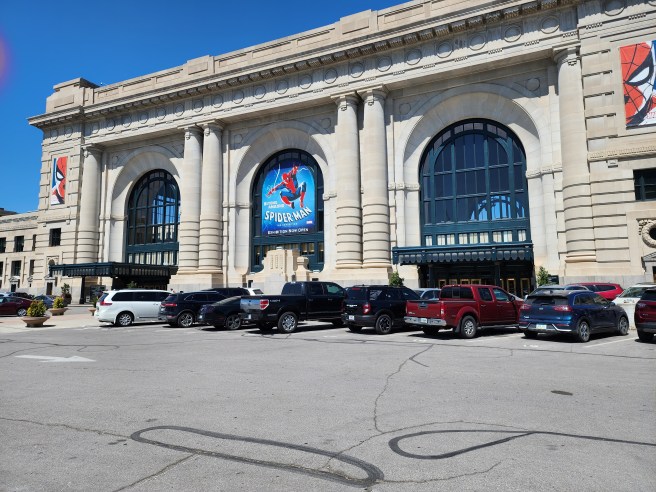
Union Station, Kansas City
My Travel Work Gig In Kansas
My traveling social work gig took me to Manhattan, Kansas, the home of Kansas State University, 2 hours from Kansas City. The quiet college town surrounded by cornfields and farms lacked entertainment, and when my hubby came to visit, we spent the Labor Day Holiday weekend in Kansas City. We visited the American Jazz and Negro Baseball Museum. It is a must-see if you decide to visit the city. My mother often talked about the Indianapolis Clowns Negro Baseball Team she saw play after she left Henry, Tennessee, and moved to Indianapolis. I enjoyed reading about the team’s history while visiting the museum, and I mentioned the group in my novel, Leaving Henry.
We also visited Kansas City Union Station and the Blue Room, a famous, historic jazz club back in the day. With its mysterious, dark vibe and thrumming jazz beat, I enjoyed listening to the music. Last but not least, we visited the Country Club Plaza on Broadway, a pretty outdoor mall with a Moorish, high-end vibe. Although Kansas City is known for good barbecue, I wasn’t impressed. Lol! But if I were to recommend a barbecue place, I encouraged you to visit Jack Stacks Barbecue at the Country Club Plaza. Their Fire-Kissed Wings, hickory cooked and rubbed in cajun spices, were to die for.
Traveling To Costa Rica on Vacation
Outdoor Eatery in the jungle.
Looking out the window from our hotel-Costa Rica
We passed by these Umbrella Plants on our journey in the Jungle
Donell shopping at the flea market in San Jose
Waiting for ice cream at the flea market.
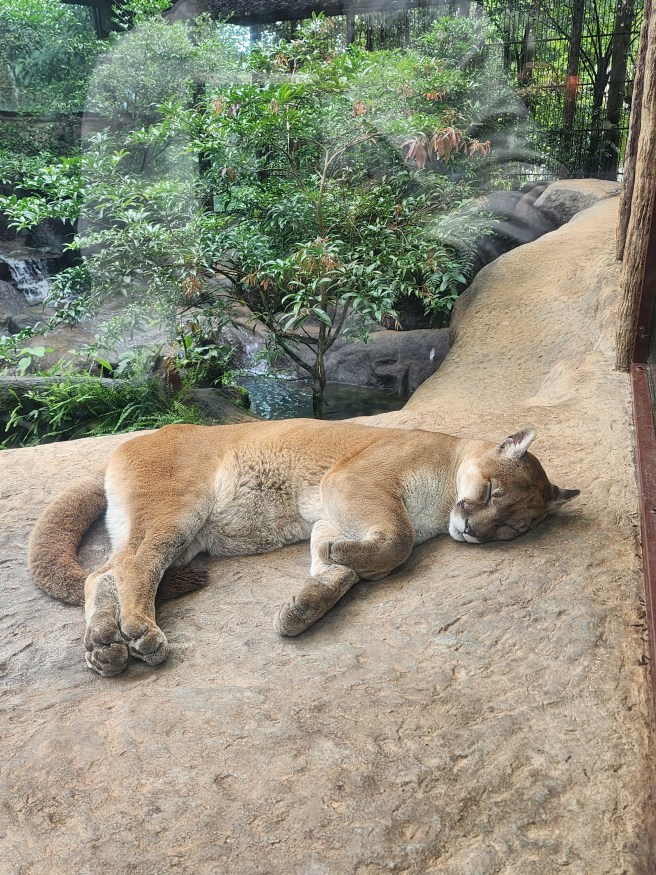
Bobcat resting on the path during our hiking journey.
My hubby and I visited Costa Rica this past July, a Central American country known for its Pacific and Caribbean coastline, rainforest and jungles full of wildlife, and vast green coffee plantations. The most exciting thing about Costa Rica was the loud, screeching, colorful, exotic birds we heard all day. The locals told us they become louder and shrill when rain is on the horizon.
I could take a picture of one of those Screeching Birds during my various treks through Costa Rica.
On our first day, we spent the day in bustling San Jose, the capital of Costa Rica, combing their large flea market, Mercado Central. The busy retail bazaar is a crazy maze of narrow alleyways with vendors selling wares from Costa Rica’s famous ice cream, Lolo Mora, to authentic pottery, jewelry, and masks. We spent the whole day there shopping.
The following day, we did an 8-hour hike to Poas Volcano, an active 8,848 ft stratovolcano in central Costa Rica in Poas Volcano National Park. During our journey, we saw exotic plant life like the umbrella plants in the picture above and various wild animals. We stopped and ate delicious, spicy taco salads at a fun outdoor restaurant. The 8-hour hike worked every muscle in our body, and we were tired at the end of the day.
We also had an opportunity to visit a coffee farm, Cafe de Monteverde, a few miles from our hotel. We tasted three different coffees. The nutty coffee aroma smelt delightful, and the delicate, smooth balance of acidity, buttery, and sweetness danced on my palate. I enjoyed all three coffees so much I bought a pound each to take home.
Coffee Bean Tree @ Cafe Monteverde during my pilgrimage to the Coffee Plantation.
Coffee Beans Before Roasting
Therefore, as you can see, my travels inspire me to write and share my adventures and experiences with all of you. Next year, we plan to visit Egypt once I finish my final draft of Leaving Henry. I’m still determining what exciting traveling work gigs may come my way, but I will keep you informed. In the meantime, have a Merry Christmas and a joyous Happy New Year!
Happy Father’s Day and Juneteenth, Everyone! It’s been a while since my last post. I’ve been busy winding up my work contract in Alaska. I will return home to Atlanta at the end of the month, and I am looking forward to it.
At the same time, I have been feverishly writing my newest novel, Leaving Henry. I am writing chapter twenty-seven and have eight more chapters to go. However, I took a break this weekend and drove to Homer, a scenic coastal town in Alaska. Simply a true paradise. Whereas, yesterday, early morning, around seven-thirty, I left Anchorage. It was a bright, sunny day, the temperature in the mid-sixties, a welcome delight after enduring dreary days of cold and rain.
The Drive
Despite the long five-hour drive, I enjoyed the breathtaking mountain terrain. Stopping along the way to take pictures. I even saw a Momma moose and her calf leisurely crossing the road, amazed at how big these animals can get. By noon, I arrived in Homer. A coastal paradise nestled against the majestic Kachemak Bay and Cook Inlet. One can also get there from Anchorage on a 45-minute flight. Hungry, I stopped at Flat Olives Restaurant. A lively spot set in a former garage on Ohlson Lane. My friend and colleague, Julie, an Alaskan native, recommended the place. The eatery serves wood-fired pizzas, sandwiches, seafood, and steaks. I ordered a 12-inch Roman pizza with pepperoni, Alaskan style, which was quite delicious. I ate three pieces and took the rest to go.
The Homer Spit
Because Homer is a scenic, coastal town, it has plenty of rustic log cabins, cozy bed and breakfasts, and hotels to suit every traveler’s lodging taste. The Homer Spit, a 4.5-mile-long piece of land jutting into the Kachemak Bay, has numerous local-owned restaurants with fresh seafood. Colorful shops with native wares make for an intriguing shopping experience. Next, I drove down the Homer Spit, parked, and walked the busy road along the beach. People walked on the road and the beach, and bikers rode the spit. Furthermore, patrons crowd the shops on both sides of the strip. Visitors, who preferred to rough it, parked campers in designated lots along the coastal strip. Some folks pitched tents on the beach instead of paying for lodging. The locals referred to these campers as Spit Rats. Needless to say, the beach proved to be a pretty lively place!
Shopping
Sometime later, I stopped in a shop called Lamp Work Beads. A sucker for earrings, I bought two pairs. The owner told me the earrings were made by Paula Rourke, the only lamp bead earring maker in the United States. I left that shop, pleased I had a little national treasure. Lastly, I stopped by the Bear Creek Winery on Bear Creek Drive. I participated in a wine tasting and loved the winery’s Rhubarb Wine. A delicious, sweet, crisp dessert wine made from rhubarb fruit. I bought two bottles and a chardonnay setting me back $80. I learned the winery’s owner was also from the South. A North Carolina Native who came to Homer years ago after she married.
Afterward, I sat on the deck and enjoyed a glass of Rhubarb wine at the Cozy Cove Inn, where I am staying. Watching the sun set over Homer’s majestic snow-capped mountains. Immersed in the view, I looked forward to another day in Homer. There’s plenty to do. I will be brave, dance when sunrise, and hike in the wildlife parks. Oh, wait a minute! These parks have moose and Kodiak bears—with no bear spray and cowbells to speak of to scare them away. I’ll play it safe and stick with shopping! Lol! As always, Thank you for reading. Until Next Time!
I would stand by this window every morning and observe him going through his routine. I would then call Pretoria. I was very interested in what happened to him daily.-Colonel John Hardman
President Nelson Mandela
Entrance to Robben Island Prison
The Long Dark Hallway
Mandela’s cot
stone barrier
Robben Island Dining Room
Nelson Mandela, the legend and change agent, is known as one of the great political leaders of recent times. An international hero, Nelson Mandela’s lifelong dedication to stamp out oppression in South Africa won him the Nobel Peace Prize and the presidency. However, the road to freeing his people took work. He spent eighteen of his twenty-seven years in Robben Island prison for refusing to give up the fight against apartheid. During my vacation in South Africa this past Fall, I visited the prison.
Robben Island takes its name from the Dutch word seals (Robben), located north of Cape Town. The south african locals called it Robbeneiland. Political activists and criminals were housed in the prison from the late-seventeenth century until 1996 when apartheid ended. The island is basically oval shaped and flat, barely above sea level, about two miles long and one-eighth mile wide. At the base of the island sits a pearly white stone barrier in front of the pier. Lonely and desolate, it’s out there in the middle of nowhere..
So, one cool, sunny November morning, we took a boat there on the Indian Ocean. Although deep baby blue and breath-taking, the Indian Ocean waters were calm. Once we arrived at the island, the lack of green vegetation amazed me. Mostly sand, we saw the graveyard where prisoners were buried and the bathroom hide-out where they met and talk without being overheard. Eventually, the guide took us on a tour of the prison grounds as well as inside, and I actually saw some seals wobbling and hawking on the island nearby.
Today, Robben Island is a South African National Heritage Site and museum with millions of visitors every year! Therefore, please take a moment to look at the photos and imagine Mandela’s journey of imprisonment. South Africa is free today because of his efforts and the deep committment he had to his people! Thank You for Reading! Until Next Time!






You must be logged in to post a comment.